

Diana Plater has presented readers with an intriguing tale and one very easily possible in our multicultural country. At first so many characters coming together in one way or another at a cafe in Tamarama is puzzling and almost improbable until you work out that the novel is much more than a complex plot. It an exploration of life, of coincidences, and of differences.
Our lives are like a puzzle, a jigsaw puzzle of stories of ordinary people who too often have things happen to them while the rest of us remain oblivious. Then, something draws our attention, too often too late and too often too tragic. Slowly the pieces begin to fit and Sydney comes to life with clever descriptions and some now fascinating people who make connections without really understanding the whole until after the events occur.
As we read on each story begins to blend with the story of others including some dramatic flashbacks, sad and brutal. There are so many stories to be heard and not just from immigrants, and in sharing stories understanding grows along with the belief that hope does exist. It is in listening to each other that we begin to better understand ourselves.
I highly recommend this to all readers who love intrigue, politics, romance, and a very good story. Great reading!
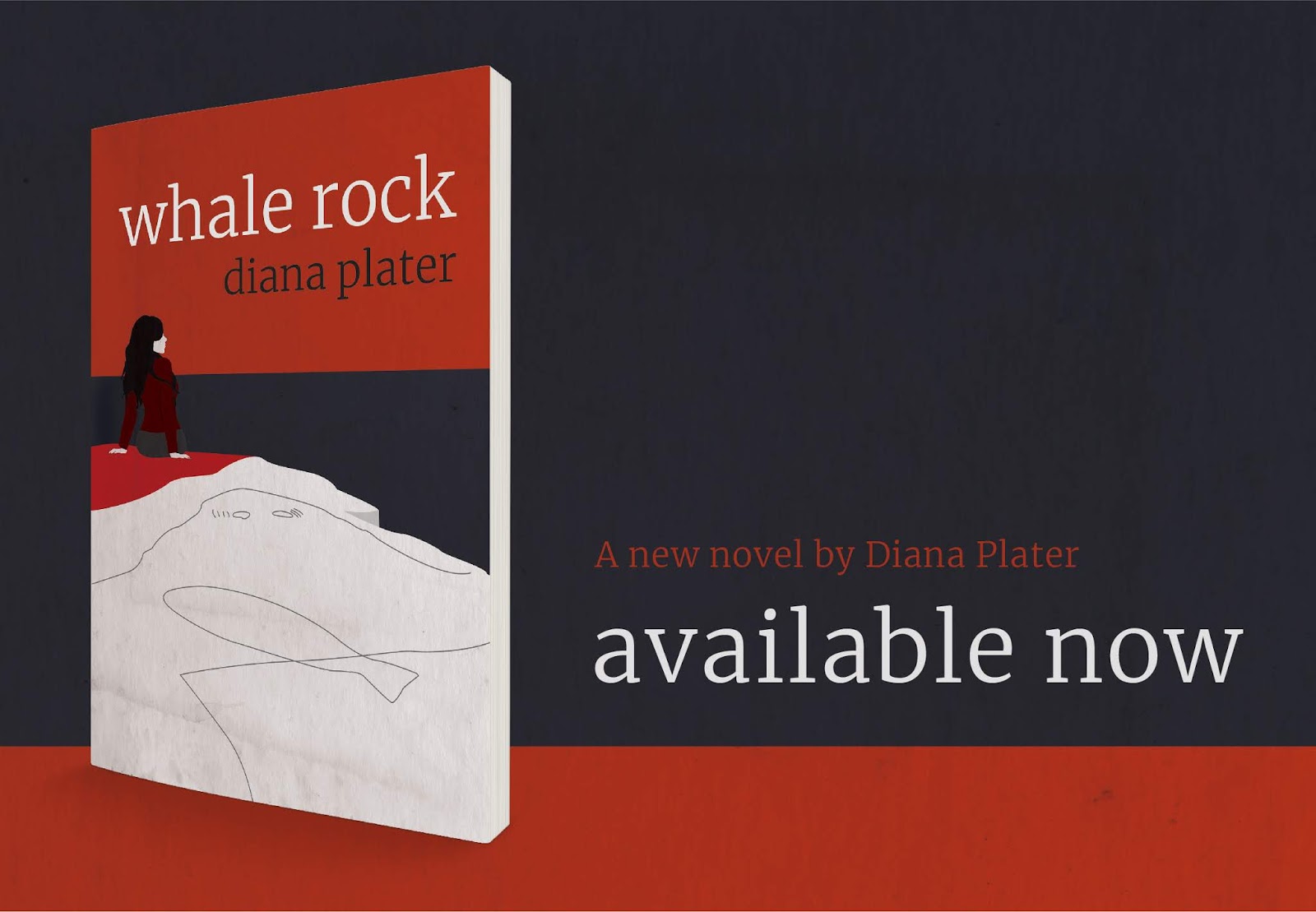
Whale Rock

Whale Rock
Diana Plater's latest book is available on:
Amazon: https://www.amazon.com/dp/1922261416
Amazon Australia: https://www.amazon.com.au/dp/B07NYHWNTR
Amazon UK: https://www.amazon.co.uk/dp/B07NYHWNTR
MoshShop: https://themoshshop.com.au/collections/new-releases/products/whale-rock-by-diana-plater
SmashWords: https://www.smashwords.com/books/view/924932
At her Tamarama café Shannon struggles with the loss of her marriage. A close friendship develops between her and Colin, an Indigenous elder, and Rafael, a Nicaraguan immigrant. When a worker plunges to his death on the building site opposite, journalist Vesna covers the story. But as their secrets are exposed all hell breaks loose and they discover they’re more connected than they ever imagined.
Whale Rock is provocative, stormy and sensual. Diana Plater gives us both human brutality and sensitivity in 21st century Sydney.
Alejandro Pérez, author, Modelo Económico
Feedback/reviews from readers:
4 June 2019
Format: Kindle EditionVerified Purchase
Thoroughly thoroughly enjoyed this book by Australian writer Diana Plater. It covers important issues in contemporary Australia, such as the treatment of refugees and indigenous Australians – the Stolen Generations – while involving the reader in the complex lives and relationships of a colourful cast. Great work.Reviewed by
BarbarinaS
An excellent read
12 April 2019 - Published on Amazon.com
Format: Kindle EditionVerified Purchase

jnana
A thought provoking and rewarding read!
1 May 2019 - Published on Amazon.com
Lucy de Bruce, PhD, University of Technology, Sydney:
Storyline:
Shannon is from a farm down the NSW South coast. The farm provides refuge when all is not well in her Sydney world. Her marriage to Tom, a philandering, firey, immigration lawyer of Serbian heritage, is on the rocks and there are inevitable tensions over money and access to their son, Maxie.
At the root of their problem is Shannon's stillbirth, which Tom blames her for, and for which she carries loss and guilt. To ensure there is cash flow in the floundering marriage, the frugal Tom sets Shannon up in a coffee shop on the Eastern beachside suburb of Tamarama. Her customers are construction workers, office workers, and glossy, pony-tailed yummy-mummies pushing giant baby buggies and hogging the tables at the cafe.
Shannon shuns the snobby, trendy, East Sydney scene preferring to cultivate an earthy, country-girl image. Her favourite refuge is a place she calls Whale Rock located on the flat rocks high above the crashing surf. It is a place that soothes her soul and where an engraving of a mother whale with a baby calf inside her, etched into the rocks, is a bewitching reminder of a sub-narrative flowing throughout Shannon's story.
At the cafe, two of Shannon's regular customers become close friends - Aboriginal Colin and Nicaraguan Rafael. Rafael enters her life at just the right time when she is feeling rejected and hopelessly inadequate as a wife, mother and daughter-in-law. The olive-skinned, pony-tailed and well-built Rafael gives her the Latin passion she craves in their sensual, erotic bedroom scenes above her cafe and in his bachelor pad. Rafael keeps an obsessive low profile; he was once a rebel leader for the Nicaraguan Sandinistas who fought the US-backed Contras. He too is scarred by a secret past in more ways than the torture burns on his body. He yearns to return to his homeland to resolve a botched love affair with an American journalist. His relationship with Shannon brings back painful memories.
Aboriginal Colin also fancies Shannon but ends up as a friend. As a five year old, Colin was a child of the infamous Kinchela Aboriginal Boys Home who was removed from his mother, Lily. He nurses a lifelong grief for his dead soldier father and older brother and tries to find out whatever happened to his mother. Lily, herself a child of the Cootamundra Aboriginal Girls Home, worked as a maid in white households down the south coast. Shannon becomes strangely obsessed by Colin's story and wants to help him find his mother. Disturbingly, Colin and Shannon share an explosive family secret.
Colin and Rafael work at a nearby building site where Colin is Rafael's boss. One day a worker is killed and there are whispers that his death may have been caused by workplace safety neglect.
Shannon, a hopeless do-gooder, insists on getting involved and through a woman acquaintance, Muslim Amany, is put in touch with Vesna, a journalist with a news wire service. Vesna is of Serbian descent and living at home (again) with her parents. When she and Shannon meet, they soon discover they share a tantalizing connection. Vesna snoops around, then publishes the workplace neglect story against the strong protests of Colin and Rafael. This leads to tragedy for Rafael.
Evaluation:
This is a fiction based on re-hashed and imagined characters from the author's past life as a journalist working in Australia, USA and Latin America. The five main characters are strangely intertwined through their parallel lives and dark secrets. The central character, Shannon, comes across as sunny and outgoing with a mischievous sense of humour. Yet a closer look reveals she is also fragile/broody/guilt-ridden/needy/selfish and erotic - with dark secrets. Tom (hapless husband) thinks she is entitled and spoiled. Her "complex" personality comes into play with the characters and situations she encounters.
The story is pacey and told in a light-hearted, cynical way, which counters some of the darker elements. Colourful vignettes of Sydney's affluent and struggling areas are deftly brushstroked as are scenes of life on her south coast farm. Like her beloved Whale Rock, the family farm ("in the valley") is a spiritual and healing place where she can escape from the big bad city. It is where treasured childhood memories, her own lost little one, and disturbing tales of Aboriginal/European relations are deeply etched into that rainforested landscape.
Conclusion:
Whale Rock is a seductive story with a cast of delicious, unexpected bedfellows! It is richly textured, exploring themes of love, grief, betrayal, child-loss, illegal immigration and brutality - all provocatively told by Sydney journalist, Diana Plater. The double narratives switching back and forth between Australia and Nicaragua are a small distraction but still work well. Overall, the book is well crafted, humorous and a page turner! Importantly, it tells the lives of invisible people in a powerful and engaging way. Above all, it shows that no matter how unremarkable a person's life may appear to be, the sheer wonder of the human experience, if well told, is as compelling and extraordinary as any noteworthy person.
Glenda:
Café owner and mother of one Shannon buries herself in work, after losing her second baby and marriage to Tom. The café she runs in Bondi is the intersection point for the five characters featured in this moving, bitingly honest debut novel by Diana Plater. Shannon doesn’t have much time for indulgent café society. She’s drawn instead to customers like Colin and Rafael who don’t fit the mould. Colin’s a foreman at a building site, struggling with scars laid down by his, and his mother’s Stolen Children upbringing in orphanages and foster homes. As with Colin, the fault line in Rafael’s life runs deep into history. Rafael’s a Nicaraguan construction worker, hiding out in Australia for a crime he committed back home during the Sandanista revolution of the ‘70s. A shared love of salsa, sparks a passionate connection between Shannon and Rafael, but their hopes founder on a journalist’s incorrigible ambition. Vesna’s struggling to retain her place at a newspaper that’s dying, but she has no intention of going down with it. Shoring up her options she starts an affair with Tom, Shannon’s ex – a Serbian Australian like herself - as well as an investigation that threatens to unravel Shannon and Rafael’s new happiness.
Tension builds and emotions run high as the characters are drawn into a race against time to beat their inner demons and defeat bloody minded officialdom. In a page turning finish, lives are nearly lost and redemption is found in unexpected ways.
Whale Rock is as diverse and complex as Australia, and every bit as interesting.
Messages:
I finished your book last week and thought it was fabulous. Absolutely gripping, found it hard to put down. Loved so many of the characters. Can't wait for your next novel!! Well done.
I just finished your book. A great book. I loved it. ...You should be proud of what you have written.
June 20, 2019
Musical meanings

This dense and poetic novel is set during the tumultuous civil rights period in the United States. Rebellion was in the air and was reflected in the music. Rock’n’roll was crossing over from only being performed by Blacks to a wider audience as it paid homage to its roots - the slave songs and chants of the cotton fields that became the blues and the gospel that became soul.

March 17, 2019
WHO DO YOU WRITE FOR?
January 25, 2017
TO BUNNINGS VIA TAMWORTH
 |
| Dobe Newton of The Bushwackers |
You couldn't feel more Strayan than when singing along to I am Australian at a Bushwackers gig at the Tamworth Country Music Festival.
The song was written in 1987 by Bruce Woodley of The Seekers and Dobe Newton - the very colourful lagerphone player/front man of The Bushwackers - and it has been suggested many times that it would make a much better national anthem than the one we're stuck with.
"We are one, but we are many" seems to sum it all up very tidily.
I can't remember when I first went to hear the Bushwackers play their Australian music but last Saturday night was up there with those early concerts. It was a wonderful performance including Celtic instruments, rousing singing and much enthusiasm even if I'm not a big fan of people over 60 wearing beach gear at a night event.(The theme was Back to the Beach.)
 |
| The Bushwackers |
 |
| Mic Conway |
For a live-music-starved fan it was Heaven. Only gripe: come on audiences move a bit with the music and show some enthusiasm and appreciation of the incredible musicians. You don't lose your rhythm as you get older, it just gets a bit sloppier.


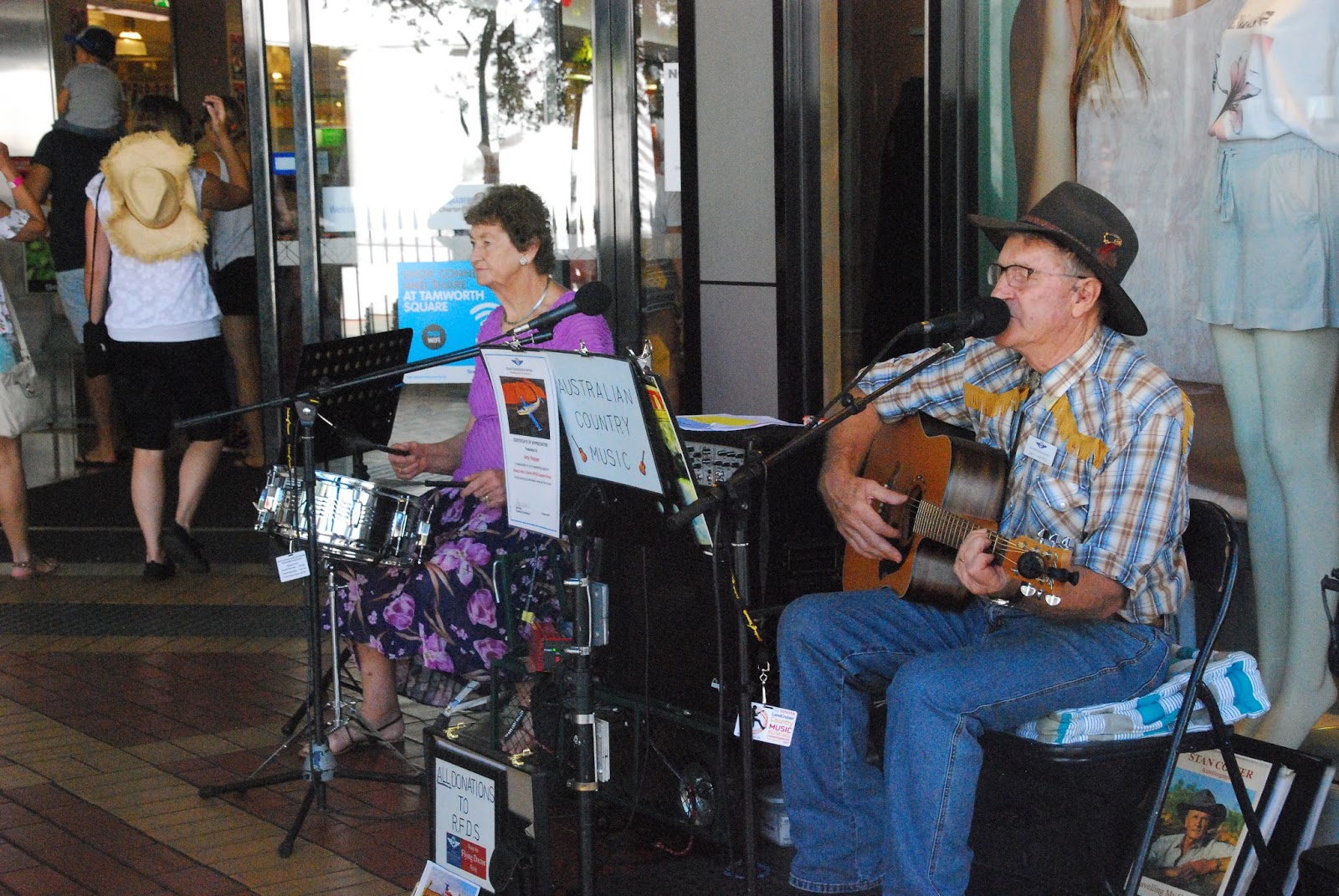 |
| Peel Street buskers |
Meanwhile, The Bushwackers have a new and very appropriate song also for this day - Another Trip to Bunnings. Might just take myself over there to buy a curtain bracket, some plugs and screws and grab a sausage sandwich while I'm at it.
'ave a bloody good day, mate.
For my foreign friends who don't know the song here are the lyrics:
(it's more like 70,000 years but still.....)
From the dusty red-soil plains.
I am the ancient heart,
The keeper of the flame.
I stood upon the rocky shores,
I watched the tall ships come,
For forty thousand years I've been
The first Australian.
Bowed down by iron chains,
I fought the land, endured the lash,
And waited for the rains.
I'm a settler, I'm a farmer's wife
On a dry and barren run,
A convict, then a free man,
I became Australian.
Who sought the mother lode.
The girl became a woman
On the long and dusty road.
I'm a child of the Depression,
I saw the good times come,
I'm a bushie, I'm a battler,
I am Australian.
And from all the lands on earth we come.
We'll share a dream and sing with one voice,
"I am, you are, we are Australian"
I'm a singer of songs,
I am Albert Namatjira
And I paint the ghostly gums.
I'm Clancy on his horse,
I'm Ned Kelly on the run,
I'm the one who waltzed Matilda,
I am Australian.
I'm the black soil of the plains,
I'm the mountains and the valleys,
I'm the drought and flooding rains.
I am the rock, I am the sky,
The rivers when they run,
The spirit of this great land,
I am Australian.
And from all the lands on earth we come.
We'll share a dream and sing with one voice,
"I am, you are, we are Australian."
January 18, 2017
Cool cars on hot days
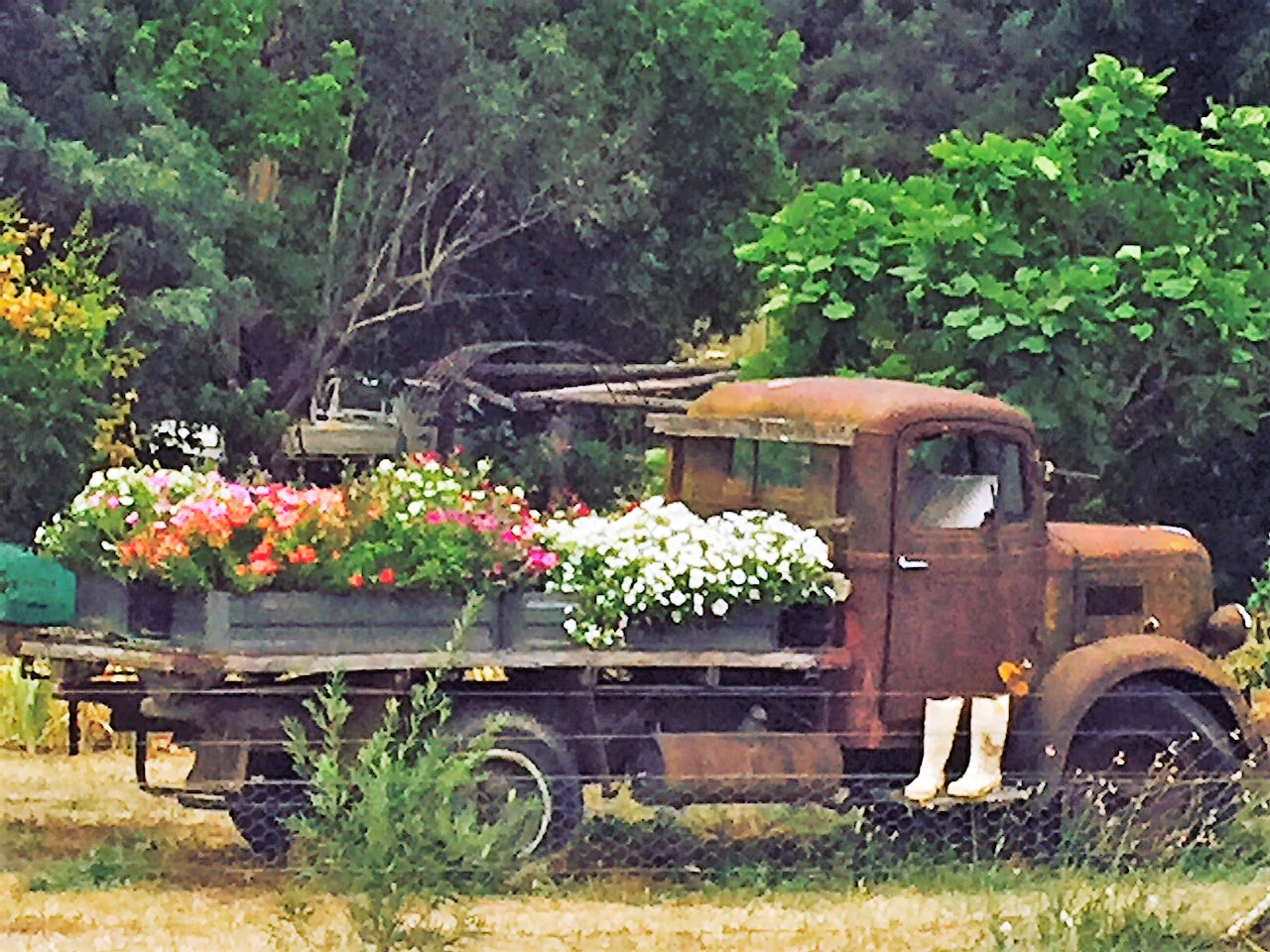
The best place to be on a 44-degree day is an air-conditioned car. We left Foxground on the NSW south coast at 9.18am and arrived at Bathurst at 4.01pm.
At Crookwell we stopped to peruse a shop called Bush Rangers and was told by the lovely shopkeeper this had nothing to do with bushrangers. But we later learnt that the Ribbon Gang hid out at Abercrombie Caves and finally were caught. In true Australian fashion they were hung, and a lane was named after them in Bathurst.
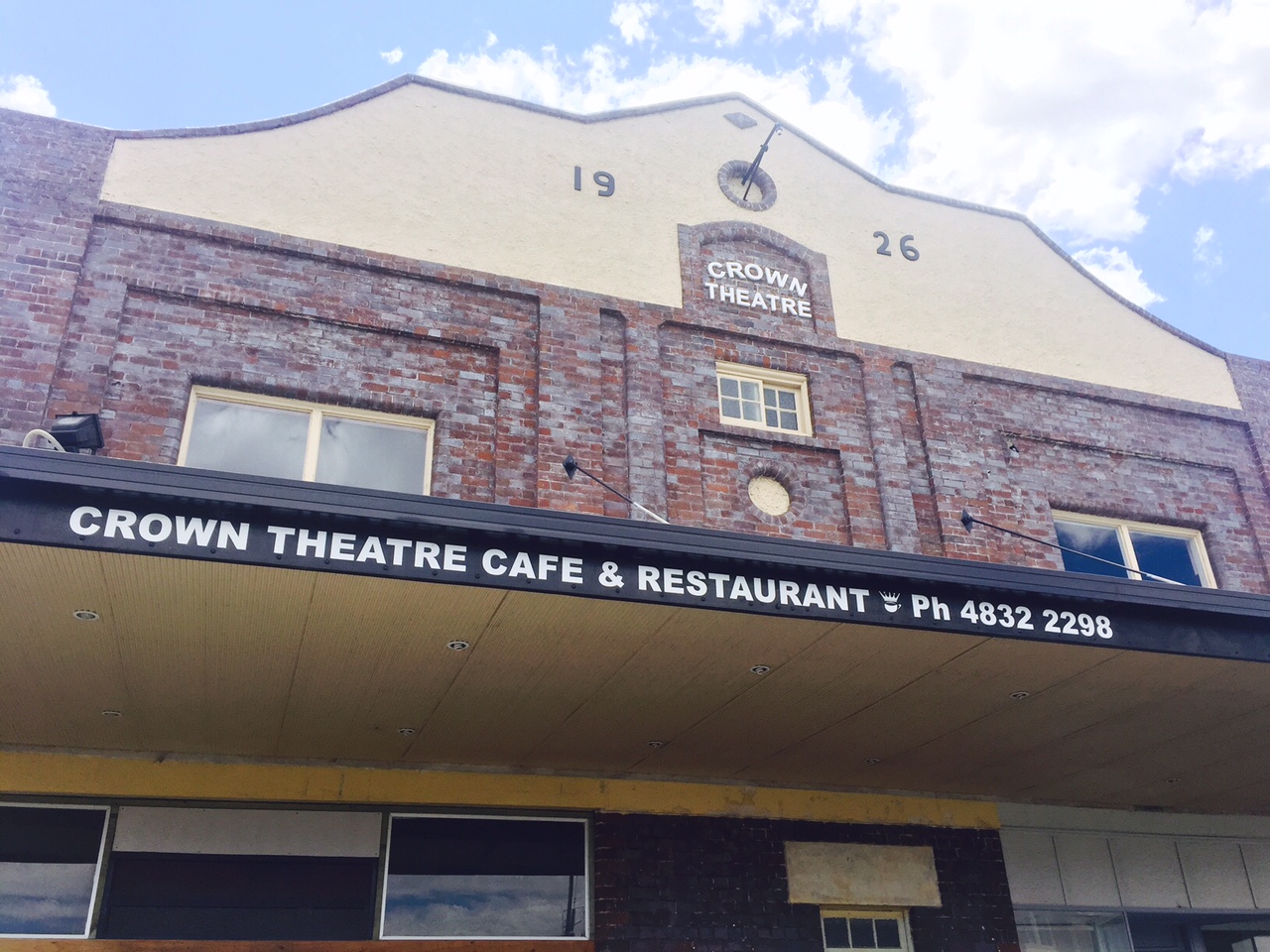
We had coffee at a converted picture theatre where we were told the rich sat upstairs and threw jaffas at the poor down below.
We ended the day with a gin and basil smash at Webb and Co bar. The best way to cool down on a very long hot day.

July 26, 2016
Rebecca and Kate Kelly
I met artist Rebecca Wilson in Beijing in January. We had a great chat and she invited me out to Hill End, where she lives in western NSW. I wrote the story below after that visit. It was fun, but very cold. It snowed the following week. I learnt a lot about Kate Kelly through this and saw some wonderful country. Keep an eye out for updates on Hill End and what other artists are doing out there in the picturesque and historic gold mining village.

Some other good travel blogs to follow
I thought you might be interested in this:
http://travelboatinglifestyle.com/best-36-travel-blogs-to-follow/
November 29, 2015
TRAVEL FACES: VALE TANNY POLSTER

This is from one of his later emails to me: “My great nephew (age 40 or 50) moans that we are a 3rd world nation. China owns us via U.S. government bond purchases. France, Spain, Japan, and other dinky nations have faster trains. Our bridges are falling down. Our roads are pitted. Obama, the social worker, told the Wall Street crooks to stay out of jail and put taxpayers into eternal debt with not a community person, not a layman, not a non-crook in on the talks. Now he doesn't know how to pretty-up the $6 to $11 million a year that the crooks are paying themselves. Rubin is God's gift to anti-Semitism. He re-appoints the government officials who presided over the chaos. Manufacturing is down. Automobile makers and airlines are bankrupt. The daily newspaper industry is dying.”
Tanny was a trailblazing journalist, activist and lobbyist who never received the recognition he deserved (not that he would have cared one hoot) and an incredible friend.